
Why Medical Colleges Need Simulation Labs
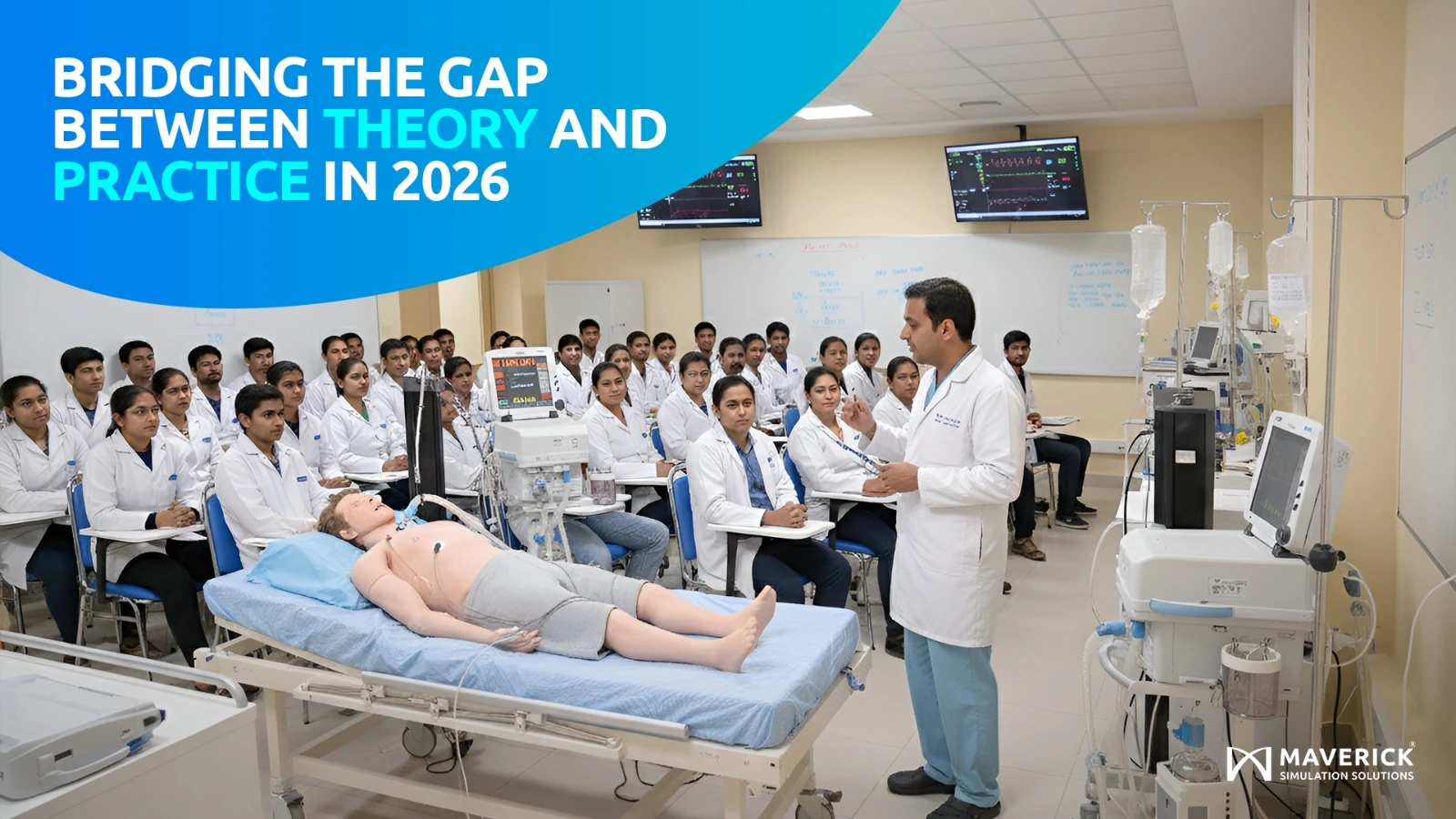
Medical simulation lab India is becoming the most important infrastructure upgrade for medical colleges in 2026. As healthcare evolves rapidly, medical education must shift from limited clinical exposure to structured, skill-based, and patient-safe learning environments. A simulation lab bridges the gap between theory and real-life clinical practice by allowing students to practice procedures, handle emergency scenarios, and make decisions in a risk-free setting.
In 2026, medical colleges in India are expected to produce clinicians who are not only knowledgeable but also competent in applying medical skills confidently from day one. That is where medical simulation lab India becomes the backbone of modern teaching.
Why Medical Simulation Lab India Matters More Than Ever in 2026
Healthcare is becoming complex—high patient loads, quick decisions, and high expectations from both patients and hospitals. Traditional learning methods alone are no longer enough. The demand for structured clinical skills training is growing strongly, and a medical simulation lab India helps colleges meet that demand.
Here’s why every college must invest now:
- Rising focus on competency-based medical education
- Need to reduce clinical errors and improve patient safety
- Limited patient availability for repetitive student practice
- Increasing importance of emergency readiness and teamwork training
- Simulation-based education is widely recognized for improving clinical skills teamwork, and confidence.
Medical Simulation Lab India Helps Build Real Clinical Confidence
One of the biggest benefits of a medical simulation lab India setup is confidence-building. Students often experience fear or hesitation when performing procedures for the first time on real patients. Simulation training removes that fear by giving repeated practice in a controlled environment.
In a simulation lab, students can confidently learn:
- Airway management and intubation
- CPR and advanced life support
- IV cannulation and injections
- Suturing and wound care
- Emergency trauma response
- The key advantage is: practice until perfection, without harming a patient.
Medical Simulation Lab India Improves Patient Safety Through Error-Free Learning
When students learn directly on patients, errors are possible—especially in early clinical years. But a medical simulation lab India provides a safe space where learners can make mistakes, learn from them, and improve.
Simulation-based training is strongly linked with patient safety improvement and better clinical performance.
This matters in India because hospitals are already overburdened, and patient trust is critical.
Medical Simulation Lab India Supports Competency-Based Education (CBME)
Competency-Based Medical Education requires students to demonstrate skills—not just pass theory exams. The National Medical Commission (NMC) has published guidelines that highlight the importance of skills labs and simulated learning environments.
A modern medical simulation lab India aligns directly with CBME because it enables:
- structured skill sessions
- observation-based assessments
- repeated competency tracking
- faculty-supervised performance evaluation
In short: simulation labs make competency measurable and teachable.
What Should a Medical Simulation Lab India Include in 2026?
To build an effective medical simulation lab India, colleges should include a mix of:
High-Fidelity Patient Simulators
Full-body simulators for ICU, trauma, anesthesia, and emergency training.
Task Trainers
For procedure-based training like:
- IV/IO access
- lumbar puncture
- catheterization
- airway models
- suturing pads
CPR Feedback Systems
Advanced CPR mannequins with real-time performance metrics.
Virtual Simulation / VR Training
VR-powered clinical scenarios to train decision-making and situational awareness.
Audio-Visual Debriefing Setup
A vital component—because simulation learning becomes powerful only when followed by structured debriefing.
Medical Simulation Lab India is Not Just for Students—It’s for Hospitals Too
A well-developed medical simulation lab India does not serve only MBBS students. It becomes a continuous training hub for:
- interns
- residents
- nursing staff
- emergency teams
- technicians and paramedics
Hospitals can run:
- Code Blue drills
- Trauma simulations
- ICU emergency training
- Teamwork and leadership exercises
- That’s why simulation labs improve overall institutional readiness.
Top Applications of Medical Simulation Lab India
A medical simulation lab India setup supports multiple training areas:
- Clinical Training
- Surgical simulations
- Patient care & communication
- Emergency medicine practice
- Lecture demonstrations (interactive teaching)
- Virtual anatomy labs
- OSCE / skill-based exams
It becomes a complete learning ecosystem—not just a lab.
At Maverick Simulation Solutions, we support institutions across India in building advanced medical simulation lab India infrastructure with world-class patient simulators, skills trainers, and complete implementation support.
For deeper reference and global proof of simulation’s impact, explore:
Conclusion: Why Medical Simulation Lab India is a 2026 Must-Have
A medical simulation lab India is no longer optional—it is a necessity for every medical college aiming to produce skilled, confident, and patient-safe doctors in 2026. With competency-based education becoming stronger and healthcare expectations rising, simulation labs will define the future of medical training in India.
Medical colleges that invest today in a strong medical simulation lab India will lead tomorrow’s healthcare workforce with better outcomes, safer practice, and higher trust.
Frequently Asked Questions (FAQs)
1: What is a medical simulation lab in India?
A medical simulation lab India is a training environment where medical students and healthcare professionals practice clinical skills using mannequins, task trainers, and digital simulation tools—without using real patients.
2: Why do medical colleges need a medical simulation lab in 2026?
In 2026, a medical simulation lab India is essential to meet competency-based education goals, improve clinical confidence, and ensure patient safety through structured practice.
3: Is simulation lab mandatory for medical colleges in India?
The NMC has published guidelines supporting skills and simulation-based learning as part of competency-based medical education.
4: What equipment is required in a medical simulation lab India?
The NMC has published guidelines supporting skills and simulation-based learning as part of competency-based medical education.
5: Who can use a medical simulation lab besides MBBS students?
A medical simulation lab India can be used by interns, residents, nurses, paramedics, and hospital emergency response teams for continuous clinical upskilling.
6: How does a medical simulation lab improve patient safety?
A medical simulation lab India reduces real-patient exposure during learning and helps train healthcare professionals to manage emergencies with fewer errors.