The LapVision simulator provides a safe, comprehensive platform for surgeons to refine laparoscopic skills
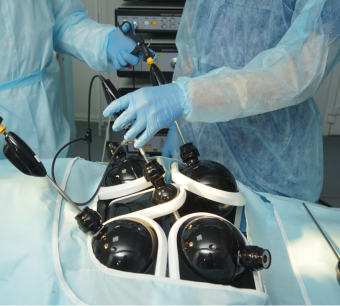
The LapVision simulator has been designed for surgeons and a wide range of medical specialists to safely learn, refine and retain laparoscopic skills. From basic to advanced levels of operation, LapVision provides a comprehensive educational platform that tests technical skills in a variety of surgical scenarios. LapVision can be easily integrated into any surgical curriculum or training program, complete with a library of educational modules of common laparoscopic procedures.
It integrates easily into training programs and includes modules for common procedures.
Unique Simulation Features
Integrating the principles of Human Factors to enhance clinical performance
Enhance anaesthesia and surgical team performance in critical scenarios
Full range of advanced ventilation scenarios
Complete range of resuscitation and anaesthesia procedures
Surgeon’s actions can be controlled with the patient simulator’s vital signs
Magnetic haptic feedback with true-to-life tissue resistance
Mastering instrument handling
Our proprietary Magnetic Haptic System provides realistic feedback
Magnetic Haptic System is also more reliable than mechanical ones
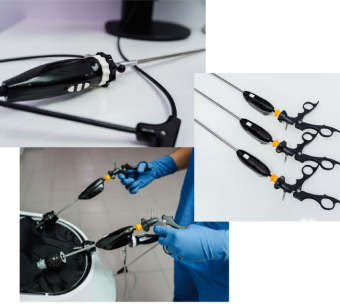
Wireless instruments can be completely removed from the port
Instruments use integrated gyroscopes for easy tool selection and swap
A camera imitator with angle adjustment control
A complete training solution
Training and exam modes
Detailed statistics after each module
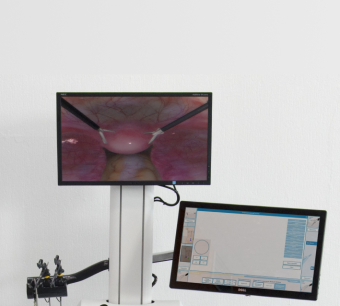
High definition 3D graphics
Video and text materials
3D anatomy atlas
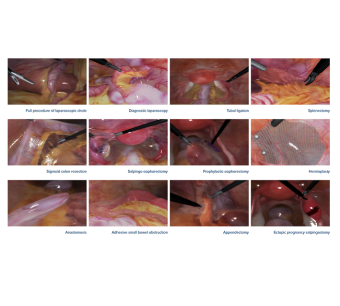
An Extensive Library of Educational Modules
Internal organs and abdominal cavity are modelled using footage from real surgeries
Internal bleeding that occurs during the exercise will lead to changes in the patient’s condition including possible death
When coagulating or dissecting, the tissues of the internal organs change and react accordingly
Realistic fluid physics
The abdominal cavity is operable, presenting the perfect learning opportunity to make surgical mistakes and then correct them
Explore advanced laparoscopy simulator with virtual reality features. Enhance surgical skills using our virtual reality laparoscopy simulator for realistic training.
Explore advanced laparoscopy simulator with virtual reality features. Enhance surgical skills using our virtual reality laparoscopy simulator for realistic training.
Explore advanced laparoscopy simulator with virtual reality features. Enhance surgical skills using our virtual reality laparoscopy simulator for realistic training.
Explore advanced laparoscopy simulator with virtual reality features. Enhance surgical skills using our virtual reality laparoscopy simulator for realistic training.
Specifications
Lorem ipsum dolor sit amet consectetur. Nunc maecenas nunc sit ultrices eget pretium nulla amet sapien.
Spontaneous breathing Bilateral and unilateral chest rise and fall Bilateral tension pneumothorax
Needle decompression Ventilation using a real mechanical ventilator
Hook up to a virtual anesthesia machine
Laparoscopic instruments
Wireless instruments can be pulled out from the ports for maximum realism
Modelled after real instruments
Effortless tool selection and swap
Freeze function for all instruments if you want to train using one hand only
Other
Scenario constructor
Extended debriefing
Lapvision Hybrid
LapVision provides a comprehensive educational platform that tests technical skills in a variety of surgical scenarios. LapVision can be easily integrated into any surgical curriculum or training program, complete with a library of educational modules of common laparoscopic procedures.
Our innovative simulation products provide immersive training experiences that enhance clinical proficiency and decision-making. Get in touch with us to discover how our solutions can elevate your training and improve patient outcomes.”
Frequently Asked Questions (FAQs)
1. What is LapVision Hybrid laparoscopic simulator?
LapVision Hybrid is an advanced laparoscopic training simulator designed to help surgeons and medical professionals learn, refine, and retain minimally invasive surgical skills in a safe and controlled environment.
2. What makes LapVision Hybrid different from standard laparoscopic simulators?
LapVision Hybrid combines virtual simulation, haptic feedback, and patient physiology interaction to create a highly immersive training experience beyond traditional box trainers.
3. What skills can be learned using LapVision Hybrid?
Trainees can develop:
Instrument handling & precision
Camera navigation & depth perception
Suturing and knot tying
Tissue dissection & electrocoagulation
Hand-eye coordination and psychomotor skills
4. How realistic is the haptic feedback system?
LapVision Hybrid uses a magnetic haptic system that simulates true-to-life tissue resistance, providing realistic tactile feedback during surgical procedures.
5. Does LapVision Hybrid support team-based surgical training?
Yes. The simulator incorporates human factors training principles to enhance coordination between surgical and anesthesia teams during critical scenarios.
6. Can LapVision Hybrid simulate patient vital sign responses?
Yes. Surgical actions can influence simulated patient vital signs, allowing trainees to understand the physiological impact of their decisions.
7. What procedures or modules are included in LapVision Hybrid?
The system includes modules covering basic laparoscopic skills and common surgical procedures, allowing training from beginner to advanced levels.
8. Does LapVision Hybrid provide performance tracking and assessment?
Yes. The simulator offers training and exam modes, detailed performance statistics, and post-module analysis to evaluate skill progression.
9. What features improve instrument handling training?
Key features include:
Wireless instruments
Gyroscope-based tool selection
Adjustable camera control
Realistic port access and movement
10. Why is hybrid laparoscopic simulation training important?
Hybrid simulation enhances surgical accuracy, improves team coordination, reduces intraoperative errors, and prepares surgeons for real-world operating room challenges.