
Neonatal Patient Simulator
Mia - High Fidelity Trainer for Acute Neonatal Emergencies
MIA™ Neonatal Patient Simulator for Emergency, Critical Care & Resuscitation Training
MIA™ is an advanced neonatal patient simulator designed for emergency and critical care training. Featuring realistic airway management, breathing, auscultation, CPR, and vascular access capabilities, it enables healthcare professionals to build confidence and clinical competence in time-critical neonatal scenarios.
Gender – Female
Height – 21.5
Weight – 4.1 kg
Unique Simulation Features
in-situ and 'Just in time' training
The wireless design of Mia and her extensive battery life (7- 8 hrs) enables in-situ simulation training to take place in the NICU and wl help to overcome challenges in training schedules, enhence performance in new teams and provide an opportunity to practice rare emergeney scenarios just before patient admissions.
Airway
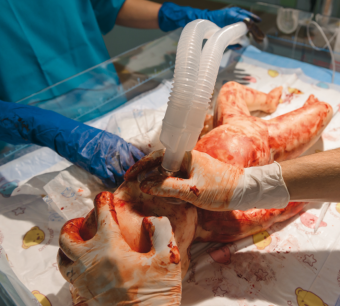
We understand how important for neonatologists intubation is, this is why Mia’s airways are as realistic as possible, wear-resistant material makes sure that trainees can intubate again and again - until they perfect it. Feel more knowledgeable and confident, when you work with real tiny patients in your professional life.
Can’t Intubate, Can’t Ventilate
The anatomically correct, realistic feel апа durable desian of Mia's ainway allows trainees to hone their airway management skills in advanced neonatal emergency scenarios.
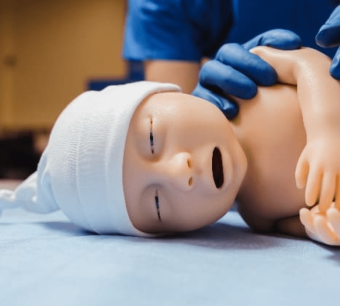
in-situ and 'Just in time' training
The wireless design of Mia and her extensive battery life (7-8 hrs) enables in-situ simulation training to take place in the NICU and will help to overcome challenges in training schedules, enhance performance in new teams and provide an opportunity to practice rare emergency scenarios just before patient admissions.
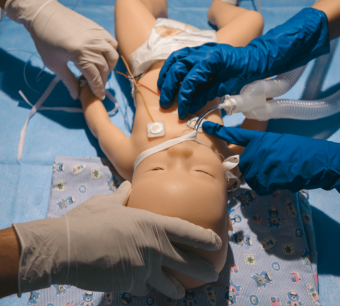
Specifications
Breathing
- Spontaneous breathing
- Programmable respiratory complications
- Programmable respiratory rate
- Variable bronchi Resistance
Airways
- Anatomically accurate upper airway
- Head tilt, chin lift, jaw thrust
- Laryngeal mask airway insertion
- Pneumothorax
Neurology
- Tonic and clonic seizures
- Programmable blinking rate
- Programmable palpable fontanel
Auscultation
- High-fidelity heart, lung and bowel sounds
- Independent normal/abnormal heart sounds
- Independent normal/abnormal lung sounds
Blood Circulation
- Rich library of ECG rhythms
- ECG heart rate of 20 to 200 bpm
- Real ECG electrodes
- Cyanosis
Vascular Access
- Intravenous access (umbilical, temporal, dorsal hand)
- Intraosseous access (tibia, bilateral)
CPR
- Realistic chest compressions
- Automatic activity log, displaying all user actions
- Depth, frequency, hands placement assessment and log
Other Features
- Sounds: crying, screaming, coughing, moaning, grunts
- Realistic bone structure, palpable ribs, kneecaps and many more
- Realistic joint articulation
Breathing
- Spontaneous breathing
- Programmable respiratory complications
- Programmable respiratory rate
- Audible needle decompression with realistic feedback
- Respiratory rate synced to patient monitor vital signs
- Mechanical ventilation (PCV and VCV) PEEP (up to 40 cm H2O)
- Programmable chest rise and fall
- Variable Bronchi Resistance
Airways
- Anatomically accurate upper airway
- Orotracheal and nasotracheal intubation
- Head tilt, chin lift, jaw thrust
- Laryngeal mask airway insertion
- Programmable airway resistance
- Pneumothorax
- Pharyngeal airflow obstruction
- Intubation depth detection and logging
- Imitation of trismus, tonic and clonic seizures
- Cyanosis and acrocyanosis
- Bilateral chest rise and fall
- Programmable bilateral bronchi resistance
- BVM Ventilatilation
- Tongue edema
- Laryngospasm
- Sellick Manoeuvre
- Positive pressure Ventilation
- Esophageal intubation
Ausculation
- High-fidelity heart, lung and bowel sounds
- Independent normal/abnormal heart sounds
- Independent normal/abnormal lung sounds
- Normal/abnormal bowel sounds
- Auscultation of Korotkoff sounds
- Programmable bilateral chest rise and fall, synced with breathing
Blood Circulation
- Rich library of ECG rhythms
- ECG heart rate of 20 to 200 bpm
- Real ECG electrodes
- Chest compressions
- Defibrillation, cardioversion and cardiac pacing using real devices
- Cyanosis
- Defibrillator pads correct placement and logging
- Defibrillation in manual and automatic modes
- Successful compressions with their logging and effect on HR and ECG
- Programmable pulse strength
CPR
- Realistic chest compressions
- Automatic activity log, displaying all user actions
- Depth, frequency, hands placement assessment and log
- Automated logging of ventilation volume
- Manual configuration of CPR protocols
- Printable detailed CPR assessment
Other Features
- Sounds: crying, screaming, coughing, moaning, grunts
- Realistic bone structure, palpable ribs, kneecaps and many more
- Automated articulation of arms, legs and jaws
- Pre-installed themes, scenarios, programs and the Scenario Constructor software to design your own scenario
- Realistic joint articulation
MIA™
MIA™ is an advanced neonatal patient simulator designed for emergency and critical care training. It enables healthcare professionals to practice realistic clinical scenarios, enhance teamwork, and develop essential neonatal assessment, resuscitation, and patient management skills in a safe learning environment.
Our innovative simulation products provide immersive training experiences that enhance clinical proficiency and decision-making. Get in touch with us to discover how our solutions can elevate your training and improve patient outcomes.”
Frequently Asked Questions (FAQs)
What is the Mia Neonatal Patient Simulator?
Mia is a high-fidelity neonatal patient simulator designed to train healthcare professionals in newborn care, neonatal emergencies, and NICU procedures within a safe and realistic clinical environment.
What age range does Mia simulate?
MIA simulates a newborn, enabling realistic training for neonatal intensive care and emergency response scenarios.
Who can benefit from training with Mia?
MIA is ideal for:
- Neonatologists & paediatricians
- NICU nurses
- Medical & nursing students
- Emergency response teams
- Simulation training centers
What clinical skills can be practiced using Mia?
Healthcare professionals can practice:
- Neonatal resuscitation (NRP)
- Airway management & ventilation
- Intubation & oxygen therapy
- IV & IO access
- NICU emergency response
- Patient monitoring & assessment
Does Mia support neonatal emergency scenario training?
Yes. Mia supports simulation of critical neonatal conditions such as respiratory distress, cardiac emergencies, birth complications, and NICU crisis management.
How realistic is Mia’s physiological response system?
Mia replicates real neonatal responses including breathing patterns, chest rise, pulse, vital sign changes, and clinical deterioration based on medical interventions.
Can Mia be used with real medical equipment?
Yes. Mia can be used alongside real NICU equipment such as ventilators, monitors, and resuscitation devices to provide hands-on, realistic training.
What makes Mia different from traditional neonatal mannequins?
Unlike basic mannequins, Mia offers:
- Dynamic physiological responses
- Realistic neonatal anatomy
- Scenario-based training software
- Performance tracking & debriefing
- Evidence-based clinical simulation
Can instructors customize training scenarios with Mia?
Yes. Trainers can create customized neonatal scenarios, monitor learner performance, and conduct debriefing sessions to improve clinical decision-making and teamwork.
Why is neonatal simulation training important?
Neonatal simulation training improves clinical confidence, enhances response time during emergencies, reduces medical errors, and helps healthcare teams provide safer care to newborns.