Episiotomy Trainer

Epsiotomy Trainer

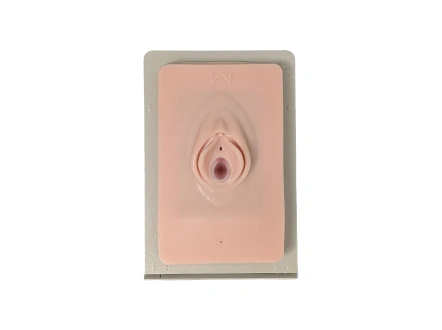
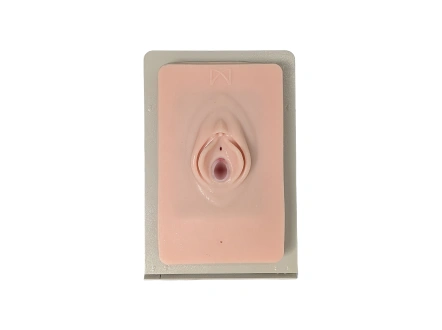
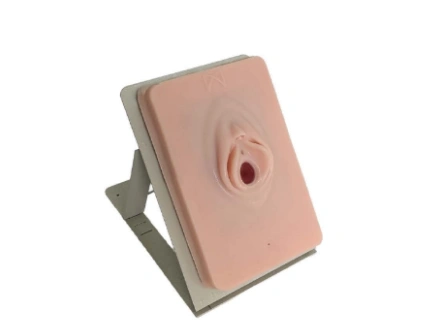
The Episiotomy Trainer is a realistic obstetric training model that helps healthcare professionals practice episiotomy procedures and perineal repair using lifelike anatomical structures and tissue-like materials. It enables hands-on training in incision techniques, suturing methods, and wound management within a safe and controlled learning environment.

  • Anatomically accurate perineal model replicating realistic maternal tissue structure.
  • High-grade silicone construction for durability and repeated suturing practice.
  • Realistic tissue feels with layered structure (skin, muscle, mucosa).
  • Supports different episiotomy types including midline and mediolateral.
  • Ideal for incision and suturing skill development with lifelike resistance.
  • Replaceable perineal pads for cost-effective, long-term usage.
  • Easy to clean and maintain for high-frequency training environments.
  • Episiotomy incision techniques (midline and mediolateral)
  • Perineal suturing and repair skills
  • Tissue handling and instrument control
  • Layer-by-layer wound closure techniques
  • Aseptic technique and procedural workflow
  • Clinical decision-making for episiotomy incision and repair
  • Local anesthesia administration (site selection and depth assessment)

Suture Pad Trainer

  • SuturePad with with 23 cuts
  • Non-Absorbable Surgical Needled Suture 3.0 4
  • Needle holder 1
  • Tissue holding forceps(toothed) 1
  • Tissue holding forceps(plain) 1
  • Sharp scissors(Iris) 1
  • Surgical Blade 1
  • Bp Handle 1

Suture Pad is a training pad for practicing different suturing techniques. It enables students to learn needle placement, stitching patterns, knot tying, superficial and deep closures.

Medical grade silicone has been used which provides realistic life like feel to the students while performing the suturing on the trainer.

Yes, they can be reused.

Epsiotomy Trainer

Develop and refine obstetric procedural skills with our realistic Episiotomy Trainer. Designed with lifelike anatomical structures and tissue-like materials, it enables hands-on practice of episiotomy incisions, suturing techniques, and perineal repair. Built for repeated training sessions, it helps learners gain confidence, improve procedural accuracy, and enhance patient safety in maternal healthcare.

Get in touch with us to discover how our Task Trainer can enhance medical training with realistic simulations tailored to your needs. Purchase products in just a few easy steps and elevate your training today!

Frequently Asked Questions (FAQs)

1. What is an Episiotomy Trainer?

The Episiotomy Trainer is a medical simulation model designed to teach and practice episiotomy incision and suturing techniques in a realistic and safe learning environment.

The trainer is ideal for obstetrics and gynecology residents, midwives, nursing students, medical students, childbirth educators, and healthcare professionals involved in maternal care.

Users can practice episiotomy incision, perineal tear repair, layered suturing, knot tying, tissue approximation, and postpartum wound management techniques.

Yes, the trainer is designed with anatomically accurate perineal structures and realistic tissue layers to provide a lifelike training experience.

Yes, the trainer allows learners to practice commonly performed episiotomy techniques, including mediolateral and midline episiotomy procedures.

Yes, it is manufactured using durable, high-quality materials suitable for repeated training and skill development sessions.

Learners can develop incision planning, suturing techniques, tissue handling, knot tying, wound closure, and postpartum repair skills.

Absolutely. The Episiotomy Trainer is widely used in medical colleges, nursing schools, simulation centers, hospitals, and obstetric training workshops.

Simulation training allows learners to practice and refine their skills before performing procedures on patients, helping reduce errors and improve clinical confidence.

Proper episiotomy repair is essential for promoting healing, reducing complications, minimizing patient discomfort, and improving maternal outcomes after childbirth.

Scroll to Top

Request a Demo