
Medical Simulation India: The Complete Guide Transforming Healthcare Education in 2026
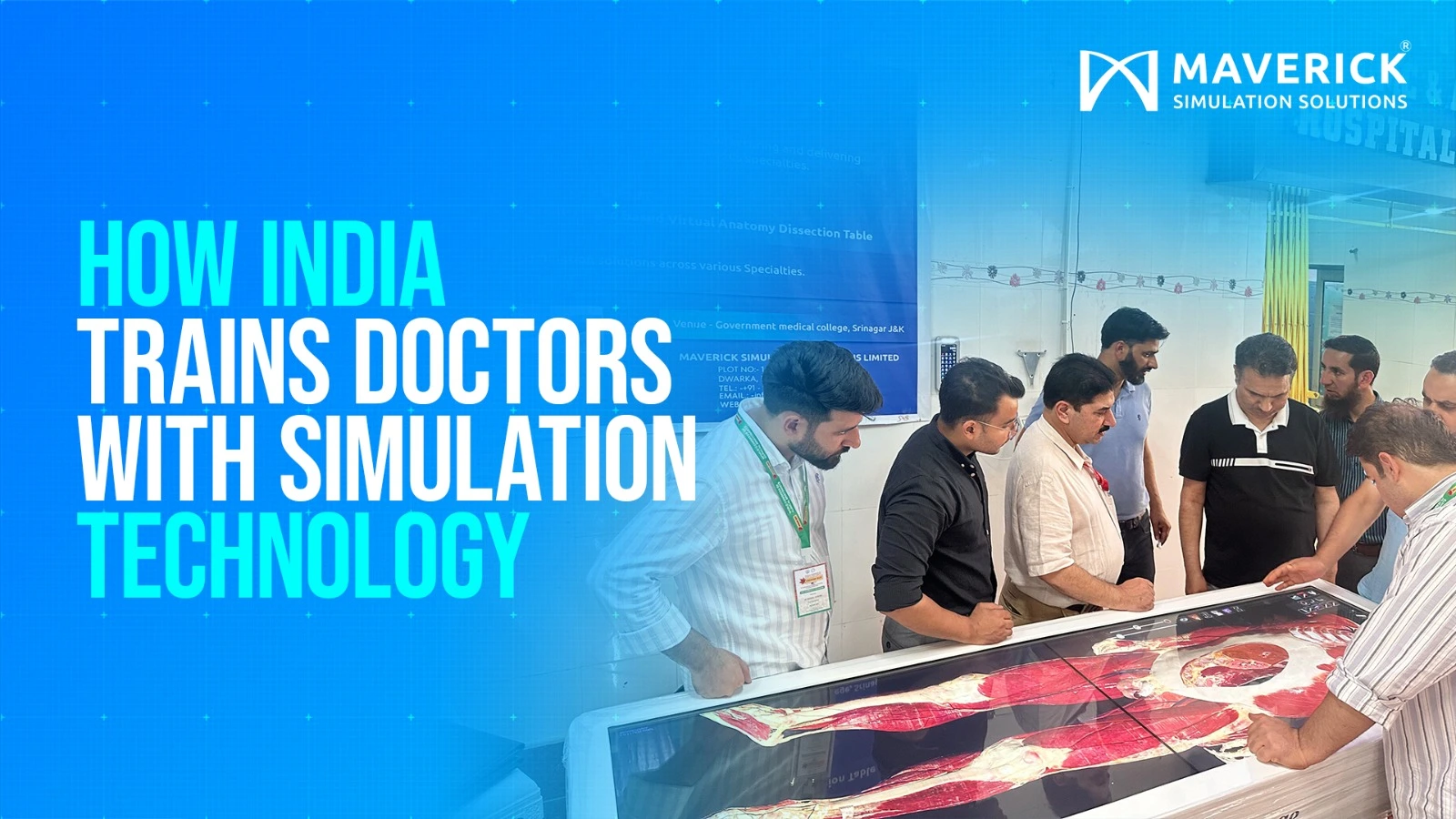
Medical simulation in India is no longer a luxury but rather an integral part of the educational process, becoming one of the major pillars of healthcare education that is revolutionizing the training of doctors, nurses, and paramedics.
Table of Contents
1. What Is Medical Simulation?
Medical simulation involves using artificial clinical settings such as basic models, advanced robot mannequins, or virtual reality settings to train health professionals on diagnosis, procedure performance, and emergency situations. The most fundamental thing about medical simulation in India is that it allows professionals to practice realistic situations without putting real patients at risk.
This approach has originated from the aviation industry which uses flight simulators for many years now to prepare pilots. This training idea has been borrowed by healthcare education sector to become a very common practice all over the world now in medical colleges, nursing colleges, hospitals, and military medical facilities.
Key insight: Studies published by the National Institutes of Health (NIH) show that simulation-based medical education significantly improves clinical skills, reduces procedural errors, and shortens the learning curve for complex medical procedures.
India trains over 100,000 MBBS graduates each year, making it one of the largest producers of medical professionals in the world. Yet the ratio of patients to trainee doctors remains extremely high — often making it difficult for students to gain adequate hands-on experience during their formative years.

Regulatory push from the National Medical Commission (NMC)
The National Medical Commission of India has incorporated Competency-Based Medical Education (CBME) in the educational framework. In Competency-Based Medical Education, training through simulations has been made mandatory as a way of acquiring practical skills before handling real patients. This has created a sudden demand for simulation training in the whole nation.
Patient safety needs
According to World Health Organisation (WHO), one in ten patients in low-middle income countries suffers from a preventable medical error while being treated at hospitals. Through simulations, the clinicians acquire competence and confidence before dealing with patients. In medical simulations, India, this is a very important public health aspect.
Advanced simulation models for critical care units in India
The advanced simulation models are high-end robotic mannequin with the ability to simulate physiological processes such as respiration, heartbeats, dilation of pupils, heart murmurs, and reactions to medications. Such simulators are the best choice in educating people on emergency medicine, anesthesia, and critical care.
SIDDH Critical Care Simulator from Maverick Simulation is a good example of an advanced simulation model used extensively in Indian hospitals and AIIMS campuses.
Lung Simulators for Neonatal and ICU Training
Neonatal Intensive Care is one of the most difficult areas in Indian Medicine. Lung simulators reproduce the workings of human breathing – giving teams the opportunity to learn about mechanical ventilation, HFOV (high-frequency oscillatory ventilation), and weaning procedures without endangering infants.
The Maverick’s LuSi Infant Lung Simulator and the adult version, TestChest Lung Simulator are utilized by neonatologists, pulmonary medicine professionals, and ICU technicians around India and worldwide.
Surgical simulators for laparoscopic skill development
Laparoscopic surgery is characterized by its requirement for a special type of hand-eye coordination which takes a lot of time to acquire solely from real-life experience. Surgical simulators help to do this much faster.
Using the LapVision Hybrid and LapVision Standard simulators, surgeons can practice manipulation of the instruments, dissecting tissue and suturing in the virtual world before getting into the operating room.
Task trainers — the backbone of nursing and skill labs
Task trainers are anatomically accurate part-body models designed for practising specific procedures. They are cost-effective, durable, and ideal for skill labs in nursing colleges and paramedic training centres.
Common task trainers used in medical simulation India programmes include:
- Adult IV Arm & Infant IV Arm: for venepuncture training
- Suture Pads: for wound closure practice
- Injection Trainer: for IM and subcutaneous injections
- Infant IO Leg: for intraosseous access in paediatric emergencies
Virtual anatomy dissection tables
Virtual Dissection Tables for Anatomy
There has always been a scarcity of cadavers in India to perform dissections on. An ideal solution is the Anatomage Virtual Dissection Table for Anatomy, which is the only real tissue dissected touchscreen anatomical table in human form, where one can explore and dissect the human body in 3D, without any ethical concerns.
Virtual Reality Simulators
VR simulation has reached the pinnacle of the use of technology in the medical education field. Maverick’s Virtual Reality Simulator provides a photorealistic environment where one can practise their skills and learn from instant feedback in emergency situations.
Benefit
What it means for your institution
Zero risk to patients
Trainees make mistakes in a safe environment before working with real patients.
Unlimited repetition
Simulation allows repeated practice of rare or high-stakes scenarios unlike live exposure.
Measurable outcomes
Performance data, debriefing scores, and competency assessments are tracked objectively.
Team training
Entire clinical teams — doctors, nurses, paramedics — can train together for coordinated care.
NMC compliance
Simulation labs help institutions meet Competency-Based Medical Education (CBME) mandates.
Institutional prestige
A well-equipped simulation centre enhances a college's NAAC/NMC grading and rankings.
Why Maverick is Unique in the Indian Medical Simulation Market
Maverick Simulation is an innovator and leader in producing and supplying medical simulation products in India. Based on the tenets of innovation and accuracy, the company has established itself as one of the most prestigious suppliers of medical simulation products in India. The DSIR-certified research and development centre of Maverick Simulation in New Delhi, India, produces simulation products tailored for India’s health care facilities.
Product Category
Key Products
Ideal For
Lung Simulators
LuSi, TestChest
NICU, ICU, Respiratory therapy
Patient Simulators
SIDDH, Mia, Arthur, MATT
Emergency medicine, Critical care, Pediatrics
Surgical Simulators
LapVision Standard, LapVision Hybrid, PickUpSim, TransferSim
General surgery, MIS training
Task Trainers
Suture Pads, Infant IV Leg, Injection Trainer, Intravenous Training Pad, Advanced Breast Examination Trainer, Adult IV Arm, Toe Task Trainer, Episiotomy Trainer, Infant IO Leg, FaceSim, Knot Tying Trainer, Infant IV Arm, Single Breast Trainer, Adult Arterial Arm, Allen Task Trainer, Cyst & Abscess Removal Trainer
Nursing colleges, Skill labs
Virtual Anatomy Table
Anatomage Table (Authorised Partner of Anatomage Inc. )
Anatomy dept., Medical colleges
VR Simulation
VR Simulation Trainer
Immersive procedural training
Maverick’s clients include AIIMS Rishikesh, AIIMS Bhopal, AIIMS Bathinda, AIIMS Deoghar, and several leading private hospital groups. Explore the full project gallery to see live deployments.
Step 1 — Needs assessment and curriculum mapping
Begin by identifying which specialties and clinical competencies your institution needs to train. An emergency medicine-focused hospital will have very different simulation needs from a nursing college or an IVF centre.
Step 2 — Space planning and infrastructure
A functional simulation centre typically requires a simulation room, a control room with AV monitoring, a debriefing room, and storage.
Step 3 — Selecting the right simulators
Match simulator fidelity to learner level. Medical students may begin with task trainers and low-fidelity models, while postgraduate trainees and consultants benefit from high-fidelity scenarios with SIDDH, LuSi, or the LapVision series.
Step 4 — Faculty training and scenario development
Faculty need to be trained as simulation facilitators, and case scenarios must be developed to align with curriculum outcomes. Maverick’s SimAcademy platform offers online courses that support faculty development alongside hardware deployment.
Step 5 — Accreditation and ongoing evaluation
Document all simulation activities for NMC inspection readiness. Reference internationally accepted frameworks like SSH (Society for Simulation in Healthcare) standards for benchmarking your programme.
1. What is medical simulation in India?
Medical simulation in India refers to the use of mannequins, task trainers, virtual reality tools, and computer-based systems to train healthcare professionals in a safe, risk-free environment. It allows doctors, nurses, and paramedics to practise clinical procedures without involving real patients.
2. Which are the best medical simulation companies in India?
Maverick Simulation, headquartered in New Delhi, is one of the leading medical simulation manufacturers in India. They offer a comprehensive range of simulators — lung simulators (LuSi, TestChest), patient simulators (SIDDH, Arthur, Mia), surgical simulators (LapVision), and task trainers — all designed and manufactured in India.
3. How much does a medical simulation lab cost in India?
The cost varies based on the type and number of simulators required. Entry-level task trainer setups can start from a few lakhs, while high-fidelity full-suite labs for AIIMS-level institutions can run into several crores. Maverick Simulation offers turnkey lab solutions with customised pricing.
4. Is medical simulation mandatory under India's CBME curriculum?
The National Medical Commission (NMC) has integrated simulation-based training into the CBME framework. Many AIIMS campuses and top medical colleges have already adopted simulation labs as a required component of their clinical training programmes.
5. What types of medical simulators are used in India?
Indian hospitals and medical colleges use: high-fidelity patient simulators, neonatal and paediatric simulators, lung simulators, laparoscopic surgical simulators, task trainers (IV arm, suture pad, injection trainer), virtual anatomy dissection tables (Anatomage), and VR-based simulation trainers.