
Patient Simulator India: The Powerful Shift Revolutionizing Clinical Training in 2026
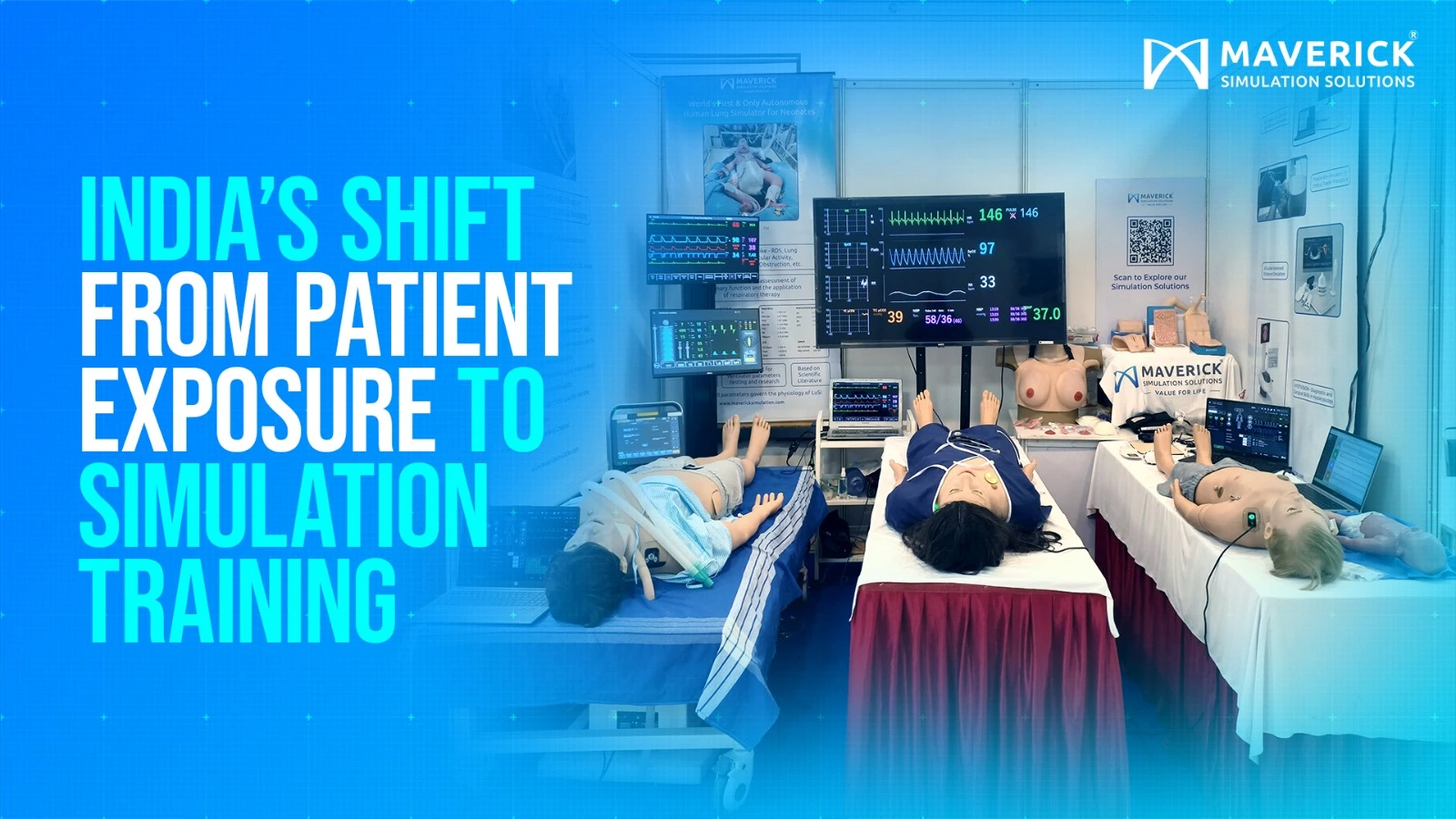
Patient simulator India adoption has crossed a tipping point — what was once a feature of only a handful of elite institutions is now reshaping how every medical college, nursing school, and hospital across the country prepares its clinical workforce for real patient care.
Table of Contents
1. What Is a Patient Simulator?
A patient simulator is a high-fidelity robotic mannequin engineered to replicate human physiology — breathing patterns, heartbeat, pulse, pupil response, blood pressure, and even verbal responses. Connected to specialised software, it allows instructors to programme realistic clinical scenarios that students must diagnose and manage in real time.
Unlike static anatomical models, a patient simulator responds dynamically to the actions of trainees. Administer the wrong dose of a drug, and the simulator’s vital signs deteriorate accordingly. Delay a critical intervention, and the mannequin can simulate cardiac arrest — giving learners a powerful, consequence-free way to internalise clinical judgement.
Between 2020 and 2025, the National Medical Commission authorised 157 new medical colleges across India — and every one of them was required to have a functioning skills/simulation lab as a condition of accreditation. This regulatory shift, combined with rising global investment in patient simulator technology, has turned the patient simulator from a ‘nice-to-have’ into core infrastructure.

NMC's Competency-Based Medical Education (CBME) mandate
The National Medical Commission of India has embedded simulation-based assessment into the CBME framework, requiring students to demonstrate competency in core clinical skills — often validated first on a patient simulator — before progressing to supervised patient contact. This regulatory shift alone has driven a wave of institutional investment in simulation infrastructure nationwide.
The push for measurable, standardised clinical competency
The World Health Organisation (WHO) identifies inconsistent clinical training as a contributing factor to preventable medical errors globally. A patient simulator allows every student — regardless of which hospital they’re posted at — to be assessed against the exact same clinical scenario, closing training gaps that vary widely between urban and rural teaching hospitals.
High-fidelity adult patient simulators -
These are the most advanced category of patient simulator, capable of replicating complex physiological responses across multiple organ systems simultaneously. Maverick’s SIDDH Critical Care Simulator is used to train teams in advanced cardiac life support, sepsis recognition, and airway management scenarios and many such procedures which are commonly seen in Indian emergency departments.
Neonatal patient simulators
Neonatal care demands an entirely different physiological model. Mia Neonatal Patient Simulator replicates a premature or newborn infant’s vital signs, enabling NICU teams to rehearse resuscitation, ventilation support, and emergency stabilisation without risking a real newborn’s safety.
Paediatric patient simulators
Children present unique clinical challenges — different drug dosing, anatomy, and presentation patterns compared to adults. The Arthur Paediatric Simulator is purpose-built to train doctors and nurses for paediatric emergencies including febrile seizures, respiratory distress, and anaphylaxis.
Auscultation and physical examination simulators
Before a student can interpret heart murmurs or lung sounds on a real patient, they must master pattern recognition. The MATT Simulator lets students practise auscultation techniques repeatedly, comparing normal and abnormal heart and lung sounds at their own pace.
Other supporting tools that complement patient simulator training in Indian colleges:
- Lung Simulators (LuSi, TestChest): for ventilation and respiratory training alongside patient simulators
- Task Trainers: for venepuncture and IV cannulation practice
- LapVision Surgical Simulators: for surgical skill development before live OR exposure
Traditional Training
With Patient Simulator Training
Limited exposure to rare/critical cases
Unlimited, repeatable practice of high-risk scenarios
Risk of harm during the student learning curve
Zero risk — mistakes happen on a mannequin, not a patient
Inconsistent case exposure across hospitals
Standardised competency assessment for every student
Subjective faculty evaluation
Objective, data-driven performance tracking
Individual learning only
Full interprofessional team training (doctors + nurses + paramedics)
Difficult NMC/CBME compliance documentation
Built-in scenario logs support accreditation readiness
Why do Indian medical colleges choose Maverick patient simulators
Maverick Simulation is a DSIR-recognised manufacturer based in New Delhi, building patient simulators specifically engineered for Indian clinical curricula and budget realities. Unlike imported-only resellers, Maverick offers local manufacturing, faster after-sales support, and pricing structured for government tender processes.
Simulator
Patient Type
Primary Use Case
SIDDH
Adult, Critical Care
Emergency medicine, ACLS, ICU training
Mia
Neonatal
NICU resuscitation, ventilation support
Arthur
Paediatric
Paediatric emergencies, drug dosing practice
MATT
Adult, Multi-purpose
Auscultation, physical examination skills
Maverick’s patient simulators are deployed across IIT Indore, AIIMS Bilaspur, BHU Banaras, IDST Ghaziabad, AIIMS Jodhpur and several leading private hospital groups.
Step 1 — Define your curriculum priorities
Identify which clinical competencies need the most reinforcement: emergency response, NICU care, paediatric management, or general physical examination skills. This determines which patient simulator category best fits your programme.
Step 2 — Match fidelity level to learner stage
Undergraduate MBBS students may benefit from task trainers and mid-fidelity tools first, while postgraduate residents and nursing staff get the most value from high-fidelity systems like SIDDH or Mia for advanced scenario training.
Step 3 — Plan for integrated lab infrastructure
A patient simulator performs best within a properly designed simulation environment — control room, AV recording, and debriefing space included. Maverick’s turnkey simulation lab solutions manage this end-to-end, from civil work to equipment commissioning.
Step 4 — Train faculty as simulation facilitators
A patient simulator is only as effective as the facilitator running the scenario. Maverick’s SimAcademy offers structured faculty development courses to ensure your team gets maximum value from the technology.
Step 5 — Align with accreditation requirements
Ensure your simulation programme generates the documentation needed for NMC inspections and NAAC evaluations. Reference SSH (Society for Simulation in Healthcare) standards when structuring assessment criteria.
1. What is a patient simulator used for in medical colleges?
A patient simulator is used to train medical and nursing students in clinical decision-making, procedural skills, and emergency response by replicating realistic human physiological responses — without putting real patients at risk.
2. Which is the best patient simulator company in India?
Maverick Simulation, based in New Delhi, is a leading patient simulator manufacturer in India, offering high-fidelity systems like SIDDH, Mia (neonatal), Arthur (paediatric), and MATT — all designed and manufactured domestically with local after-sales support.
3. How much does a patient simulator cost in India?
Patient simulator pricing in India varies by fidelity level and feature set — from mid-range task-trainer-integrated systems to advanced high-fidelity adult or neonatal simulators. Maverick Simulation offers customised quotes based on institutional requirements and budget.
4. Is patient simulator training mandatory under NMC's CBME framework?
The National Medical Commission has embedded simulation-based skill assessment into the Competency-Based Medical Education curriculum, making patient simulator training an increasingly standard requirement across NMC-recognised medical colleges.
5. What types of patient simulators are used in Indian hospitals?
Indian institutions commonly use high-fidelity adult patient simulators (SIDDH), neonatal simulators (Mia), paediatric simulators (Arthur), and auscultation-focused simulators (MATT) — each targeting a specific stage or specialty of clinical training.