
BLS ACLS Simulator India: Why Lisa Is the Most Powerful Female Patient Simulator for Life-Saving Training
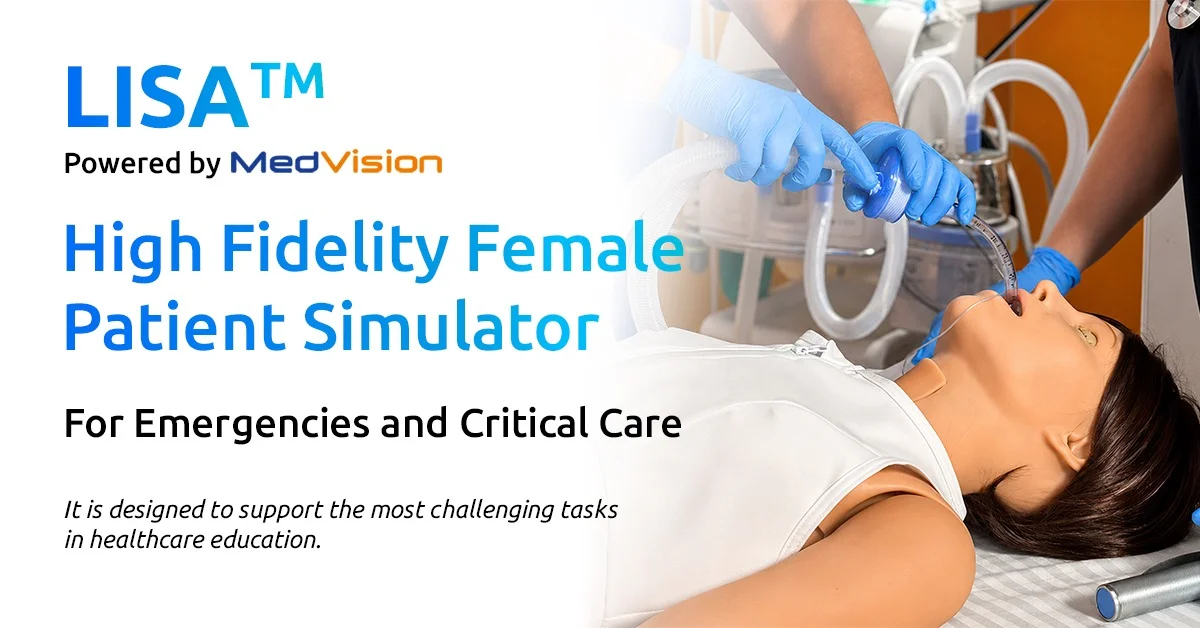
When it comes to BLS and ACLS simulation training in India, the quality of the patient simulator determines the quality of the clinical skill a healthcare professional carries into the real world. Lisa — Maverick Simulation’s high-fidelity female adult patient simulator — is purpose-built for exactly this: delivering the most realistic, immersive, and clinically accurate BLS and ACLS training experience available to Indian hospitals and medical colleges today.
Table of Contents
1. The cardiac arrest crisis India cannot ignore
Research published in PMC (National Institutes of Health) further confirms that survival rates from in-hospital cardiac arrest remain below 20% — and that ACLS skills deteriorate faster than BLS skills without regular simulation-based refresher training. The implication is direct: consistent, high-quality BLS ACLS simulation training is not a training programme enhancement. It is a patient safety imperative.
External reference: PMC — High-Fidelity Simulation as Adjunct to BLS Training
2. What makes a BLS ACLS simulator truly effective?
Not every mannequin that carries the label ‘patient simulator’ qualifies as an effective BLS ACLS simulator. The difference between a basic CPR mannequin and a high-fidelity system like Lisa is the difference between practising the motions of resuscitation and actually training for it.
Basic CPR Mannequin
Lisa High-Fidelity BLS ACLS Simulator
Static, no physiological response
Real-time vital sign changes responding to every intervention
No cardiac rhythm display
ECG monitors correctly read actual cardiac rhythms
No defibrillation capability
Patient jolts realistically when defibrillated — works with real devices
No airway feedback
Anatomically correct airway for bag-mask, intubation, and supraglottic devices
No team scenario capability
Full team BLS and ACLS scenarios with roles: leader, compressor, airway, medications
No performance data
Instructor software captures objective session data for debriefing and NMC logs
3. Meet Lisa: India's high-fidelity female BLS ACLS simulator
Lisa is a wireless, high-fidelity, full-size female adult patient simulator available through Maverick Simulation — India’s leading medical simulation solutions provider. Representing a 35-year-old female patient, Lisa is designed from the ground up for advanced life support and emergency training, combining clinical accuracy with the practical durability needed for high-volume simulation lab use.
Why Lisa: Lisa is the only high-fidelity female patient simulator in India’s leading medical simulation portfolio — specifically designed to address the gap in female patient representation in cardiac life support training programmes.
Lisa — High-Fidelity Female Patient Simulator
Available from Maverick Simulation Solutions, New Delhi, India
Patient type
Full-size female adult — 35-year-old patient representation
Operation
Wireless, fully tetherless — no cables during simulation
Battery life
~8 hours — full simulation day without recharging
Real device compatibility
Defibrillators, ECG monitors, mechanical ventilators
Cardiac rhythm
ECG monitors correctly read programmed cardiac rhythms
Defibrillation response
Patient jolts realistically when shocked
Airway
Anatomically correct landmarks and airway for BLS and ACLS procedures
IM access
Upper leg (bilateral) injection sites
IO access
Humeral head and tibia (bilateral) for intraosseous access
Articulation
Full articulation of neck, shoulders, elbows, hands, hips, knees, ankles
Skin
Lifelike seamless skin, easy to clean
Communication
Built-in speaker and microphone for patient voice and instructor communication
Software
Intuitive instructor software with pre-installed clinical scenarios and programmable patient states
4. Lisa's key features for BLS and ACLS training
Wireless tetherless operation — total freedom in the simulation room
A tethered mannequin limits where scenarios can be set up and disrupts the immersive quality of code blue training. Lisa is fully wireless — with an ~8-hour battery life — meaning your simulation team can set up realistic emergency scenarios anywhere in the lab without cable management concerns or range restrictions.
Works with real defibrillators and ECG monitors
This is the feature that separates Lisa from basic mannequins in India’s BLS ACLS training market. Real defibrillators deliver real shocks — and Lisa’s body jolts realistically in response. Real ECG monitors read Lisa’s programmed cardiac rhythms exactly as they would on a real patient. Trainees learn to operate actual clinical devices, not simulation-only equipment — removing the learning gap that occurs when they transition from training to real clinical environments.
Anatomically correct female landmarks and airway
Lisa’s airway, vascular landmarks, and surface anatomy are calibrated to female patient proportions — essential for training in female-specific emergency presentations, obstetric emergencies, and the anatomical differences relevant to airway management and vascular access in female patients.
Instructor software with pre-installed BLS and ACLS scenarios
Lisa’s instructor software allows educators to run on-the-fly scenarios without extensive setup, programme specific patient states for targeted learning objectives, and switch clinical presentations mid-scenario based on team performance. This is how AHA HeartCode BLS and ACLS algorithms are taught — not from a slide deck, but through live decision-making under realistic clinical pressure.
Programmable cardiac rhythms for ACLS training
VF, VT, PEA, asystole, symptomatic bradycardia, unstable tachycardia — Lisa can be programmed to display any ACLS-relevant rhythm, allowing the instructor to build the exact scenario their team needs to practise. The rhythm displays correctly on a connected real ECG monitor, giving trainees authentic rhythm-recognition experience as part of every ACLS session.
5. Why female patient simulators matter in clinical training
The majority of patient simulators available in India represent male adult patients. This creates a subtle but clinically significant training gap — one that studies on gender-specific presentation of cardiac emergencies have consistently highlighted.
6. How Lisa transforms BLS and ACLS training: a scenario walkthrough
Pre-brief
Instructor programmes Lisa for a 42-year-old female patient presenting with chest pain who deteriorates into ventricular fibrillation. Team roles assigned: team leader, compressor, airway, medications, recorder.
BLS initiated
Lisa's vitals deteriorate on the ECG monitor display. Team confirms pulselessness and calls for the defibrillator. Chest compressions begin — rate, depth, and full recoil are trainable on Lisa's thorax.
Defibrillation
Defibrillator pads placed on Lisa's chest. Real defibrillator charges and delivers shock. Lisa's body jolts realistically. Team immediately resumes CPR for 2 minutes.
ACLS escalation
Instructor switches Lisa's rhythm from VF to PEA. Team must recognise the rhythm change and adjust: continue CPR, identify reversible causes (Hs and Ts), administer adrenaline via IO access in Lisa's tibia.
Advanced airway
Team leader calls for airway management. Second rescuer performs bag-mask ventilation through Lisa's anatomically correct airway. Intubation or supraglottic device insertion follows.
ROSC and debrief
Return of spontaneous circulation. Instructor reviews session data: hands-off time, compression quality, rhythm recognition speed, drug timing, team communication. All data logged for NMC and NABH accreditation records.
7. Who needs Lisa in their simulation lab?
Lisa is the right BLS ACLS simulator for any Indian institution that trains healthcare professionals to respond to cardiac emergencies in adult patients:
- Hospitals and teaching institutions: Emergency medicine and ICU nursing teams practising AHA HeartCode BLS and ACLS protocols
- Medical simulation centres: MBBS Phase 3 and intern doctors developing cardiac arrest management competency
- Nursing colleges: Nursing faculty delivering NMC CBME-aligned cardiac life support skill sessions
- Obstetric departments: Obstetric and gynaecology teams training for maternal cardiac emergencies
- PG training programmes: Postgraduate residents in emergency medicine, internal medicine, and anaesthesia
- Paramedical institutes: Paramedic and allied health teams building pre-hospital ACLS response capability
Lisa is available through Maverick Simulation Solutions across India. View the full Maverick product range at the Medical Solutions page, explore live project deployments in the project gallery.
For institutions needing full adult BLS and ACLS simulation capability alongside Lisa, Maverick’s SIDDH Critical Care Simulator provides the male adult high-fidelity counterpart with AI ultrasound integration and advanced lung simulation.
Frequently Asked Questions (FAQs)
1. What is the difference between BLS and ACLS simulation training?
BLS (Basic Life Support) simulation focuses on high-quality CPR, bag-mask ventilation, AED use, and two-rescuer coordination. ACLS (Advanced Cardiac Life Support) simulation extends this to include advanced airway management, ECG rhythm recognition, defibrillation, pharmacological interventions, and team-based resuscitation leadership. A high-fidelity patient simulator is required for both — and Maverick’s Lisa and SIDDH simulators support the complete spectrum of BLS and ACLS scenario-based training.
2. Which is the best BLS ACLS simulator available in India?
Maverick Simulation offers two flagship BLS ACLS simulators in India. Lisa is a wireless, high-fidelity female adult patient simulator designed for advanced life support and emergency training — fully compatible with real defibrillators, ECG monitors, and ventilators, with realistic patient jolt on defibrillation and anatomically correct female landmarks. SIDDH is Maverick’s Make-in-India critical care adult simulator with AI-powered ultrasound integration, advanced lung simulation, and real-time ABG feedback. Together they provide the most comprehensive BLS and ACLS training coverage available from an Indian manufacturer.
3. What is the Lisa simulator and what is it used for?
Lisa is Maverick Simulation’s high-fidelity female adult patient simulator — a wireless, fully articulated mannequin representing a 35-year-old female patient. It is purpose-built for BLS and ACLS training, obstetric emergency scenarios, clinical examination, and nursing education. Lisa works with real defibrillators and ECG monitors, has a built-in speaker and microphone for patient communication, programmable cardiac rhythms, and IM and IO access sites on both sides of the body.
4. Can the Lisa simulator work with a real defibrillator and ECG monitor?
Yes. Lisa is specifically designed for use with real medical devices. Real defibrillators deliver actual shocks and Lisa’s body jolts realistically in response. Real ECG monitors correctly read Lisa’s programmed cardiac rhythms — giving trainees authentic rhythm-recognition and defibrillation experience using the same equipment they will use in real clinical emergencies.
5. What is the difference between Lisa and SIDDH for BLS ACLS training?
Lisa represents a female adult patient and is designed for wireless, tetherless operation — ideal for emergency training, obstetric cardiac emergencies, and nursing simulation. SIDDH is Maverick’s Make-in-India flagship adult critical care simulator with AI ultrasound integration (1,000+ clinical cases) and advanced lung simulation with real-time ABG feedback. Both support full BLS and ACLS scenarios. Institutions running comprehensive simulation programmes often deploy both to cover the complete adult patient spectrum.
6. Is BLS ACLS training mandatory for doctors and nurses in India?
The National Medical Commission (NMC) has integrated emergency life support competencies into the CBME framework. AHA BLS and ACLS certifications are also required by many Indian hospital accreditation bodies including NABH. Regular simulation-based BLS and ACLS refresher training is increasingly a condition of hospital credentialing for emergency and critical care staff. High-fidelity simulators like Lisa and SIDDH generate the session logs required for NMC and NABH documentation.
7. Why is it important to train on a female patient simulator for BLS and ACLS?
Studies show that women experiencing cardiac arrest are less likely to receive bystander CPR than men — partly due to hesitation around performing chest compressions on female patients. Training on a high-fidelity female simulator like Lisa builds comfort, confidence, and correct technique for female patient resuscitation. It also prepares teams for obstetric cardiac emergencies and female-specific anatomical differences in airway management and vascular access.
8. Can Maverick Simulation's simulators be used for AHA HeartCode BLS and ACLS training?
Yes. Both Lisa and SIDDH are compatible with AHA HeartCode BLS and ACLS scenario delivery. Lisa’s programmable cardiac rhythms, real ECG monitor compatibility, anatomically correct airway, and instructor scenario software support the full AHA algorithm workflow. SIDDH additionally offers advanced CPR feedback and AI ultrasound integration. Both are deployed at AHA-aligned simulation centres across India.
9. How much does a BLS ACLS simulator cost in India?
Pricing varies based on fidelity level and features. Mid-fidelity simulators for basic BLS practice are available at accessible price points. High-fidelity systems like Lisa and SIDDH — with full ACLS scenario capability, real device compatibility, and instructor software — are premium investments. Maverick Simulation offers competitive institutional pricing for both, supports government tender documentation, and provides customised quotes based on each institution’s specific training requirements.
10. How do I get a demo of the Lisa simulator for my hospital or medical college?
You can request a free personalised demo of Lisa directly through Maverick Simulation’s website at mavericksimulation.com/contact/ — or visit the Lisa product page at mavericksimulation.com/lisa-high-fidelity-female-patient-simulator/ for full specifications. Maverick’s team will assess your institution’s BLS and ACLS training requirements and recommend the right simulator setup, whether that is Lisa alone, SIDDH, or a combined adult simulation programme.